When Putin took office as President, one of his first initiatives was to de-privatize 90% of Russian industries which had been sold off to oligarchs and foreign investors.
The Oligarchs were not happy, of course.
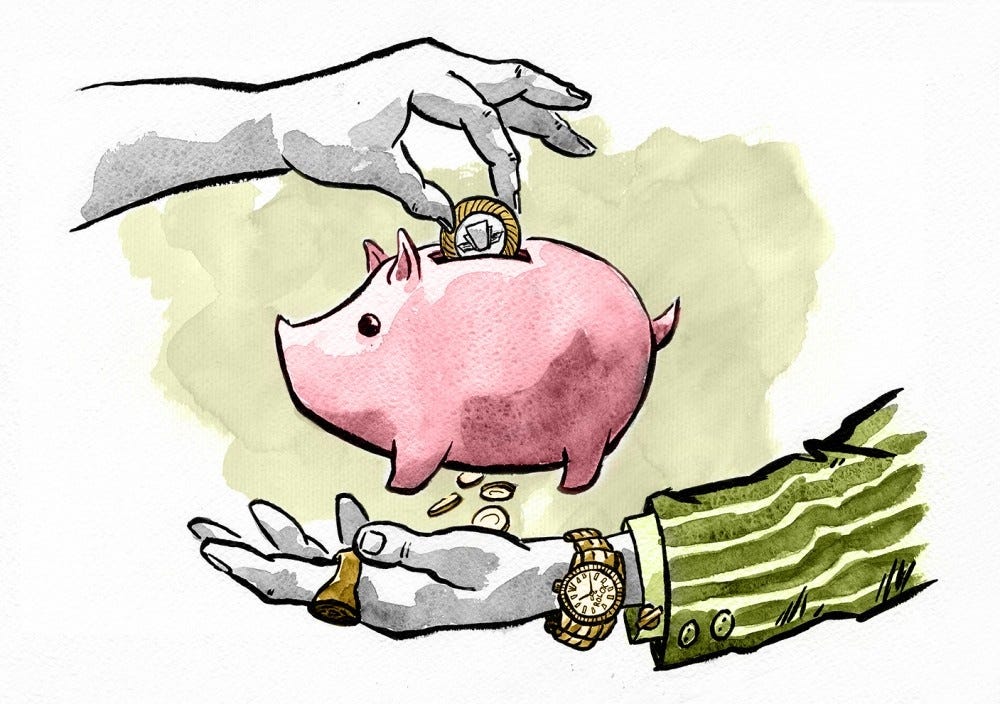
Putin’s message to them was simple, you can stay and prosper—If you perform and it benefits the public good. Otherwise, not.
That kind of meritocratic vision did not appeal to some, who moved to the West, Bill Browder among them.
The economy prospered. Russia grew. People were happy despite the Second Chechen War, and then the Georgian War, and Ukraine and sanctions.
But many of Russia’s problems - -such as entrenched bureaucracies, corruption and an “old boy system” emphasizing nepotism, cronyism and patronage —issues going back to the Czars, were hard to fix. Russia was now committed to capitalism just as China was, but, as with China, only to the extent that it worked, and delivered what it promised. There are many capitalisms. The the “bottom line” as not the same as in the West where it was the plus column on investors’ spreadsheets: it was something hard to calculate with Excel — the public good, realizing the promise of the future.
Putin grew up in communal housing, on the streets. He was ultimately proletarian. He advanced through sheer merit and moral conviction rather than ideology. So it is not surprising that he should be pragmatic — and therefore meritocratic.