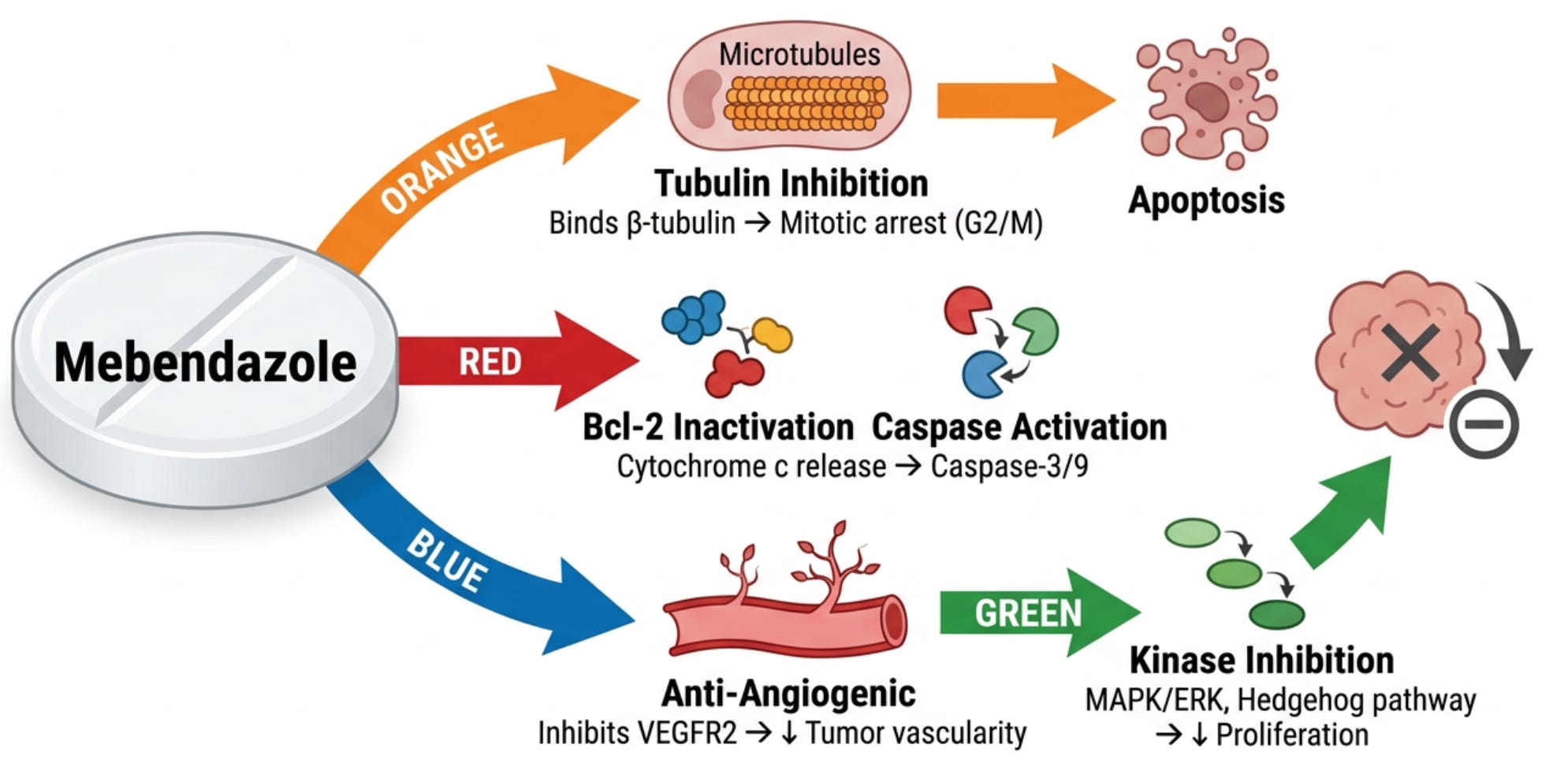
Anticancer pathways and mechanisms
A compound originally developed as a treatment for parasitic worms, mebendazole (MBZ) works by fatally disrupting the cellular microtubule formation in abnormal cancer cells that occur as the cell is attempting to divide. Like the other benzimidazoles, Mebendazole binds to the tubulin colchicine-binding domain and appears to act by both p53-dependent and independent mechanisms. (1) Mebendazole (MBZ) exerts anticancer activity through multiple, partly independent pathways, including microtubule disruption, apoptosis induction, anti‑angiogenesis, autophagy modulation, and inhibition of several oncogenic signaling axes such as Hedgehog, Wnt/TNIK, and NF‑κB/MYC. MBZ inhibits many factors involved in tumor progressions such as tubulin polymerization, angiogenesis, pro-survival pathways, matrix metalloproteinases, and multi-drug resistance protein transporters (see Figure 1). (2)
Figure 1. Anticancer pathways of mebendazole