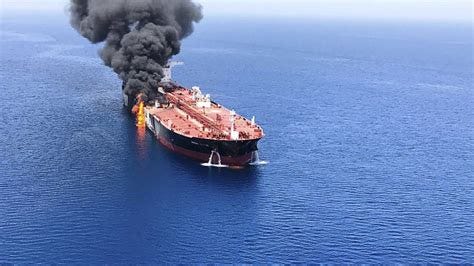
Every morning the cable networks put up the price of Brent and a graphic of a tanker, and every evening the experts reassure us that the oil is still flowing, more or less. Crude is the scoreboard everyone watches. It is also the wrong scoreboard.
Iran has hit roughly fifty ships in and around the Strait of Hormuz since September 1, most of them tankers. Against a world fleet of more than 8,000 tankers, that is a rounding error. Washington’s reassurance machine will tell you exactly that. What it won’t tell you is that a good share of what moves through the strait isn’t crude at all. It’s the stuff the modern economy is actually made of: the feedstocks for plastics, the methanol for chemicals, the urea and ammonia for fertilizer. And those markets are far less forgiving than oil.
If you want to know what Iran’s tanker campaign really costs, stop looking at the gas pump. Look in your kitchen.
What actually comes out of the Gulf
Start with plastic. The Middle East is the world’s largest exporter of polyethylene, the most widely used plastic on the planet. In 2025 the region shipped 18.7 million tons out of global exports of 43.8 million tons, more than 40 percent of the world total. According to ICIS, about 84 percent of the region’s polyethylene capacity depends on the Strait of Hormuz to reach the sea. Polypropylene and ethylene glycol, the raw material for polyester and PET bottles, follow the same route.
Then the feedstocks. Before the war, nearly 1.2 million barrels a day of naphtha moved through Hormuz, meeting 60 to 70 percent of Asia’s import needs, according to S&P Global. Asia’s steam crackers turn that naphtha into ethylene and propylene, the building blocks of nearly every plastic you own. The Gulf also supplies most of the propane and butane that feed Asia’s other plastics plants.
Then the chemicals. The Middle East exported more than 17 million tons of methanol in 2025. Iran alone shipped well over 9 million tons, and roughly 70 percent of China’s methanol imports came from the region. And fertilizer: by CRU’s count, nearly a third of global urea exports, 44 percent of sulfur exports and almost a fifth of ammonia exports pass through or originate west of the strait.
That’s the cargo Iran is shooting at. Not just oil, but the raw material for packaging, textiles, car parts, medical supplies and the fertilizer that grows the world’s food.....
The math Washington skipped
The planners who started this war modeled oil. They had the SPR, the escort plan and the pipeline workarounds. What they apparently didn’t model was that the Persian Gulf is also one of the world’s great chemical plants, and that its output has no pipeline, no reserve and no Navy escort sized to protect a fleet of small, uninsurable ships.
Iran figured that out. Its tanker campaign doesn’t have to win at sea. It only has to keep the strait dangerous enough, long enough, for the world to run short of the things that are made from what passes through it. Each strike resets the insurance clock and keeps the small ships away for another month.
So the next time someone in Washington tells you the oil is still flowing, ask them about the naphtha, the methanol and the polyethylene. Then go look at the price of a pack of diapers. That’s where this war is being lost.
