Before delving into my summary of Karl Miller’s latest analysis regarding the global energy situation I want to encourage you to take time to listen to a couple of songs I am posting. I received these from creative souls who took up my challenge to do a “War and Oil” song in the style of Bob Marley. I am posting two excellent submissions. There is another one but it is behind a google wall and I am having trouble posting it. Now, on to Karl Miller.
There is a comforting assumption in Washington, Riyadh and every boardroom with a data center on the drawing board: if something breaks, you buy a new one. Money solves things. Money has always solved things. Karl W. Miller, an energy analyst whose calls I have learned to take seriously, has just written a sober, meticulously hedged report on the global power-equipment market, and its central finding can be summarized for the C-suite in one sentence. You can print money. You cannot print a turbine.
The waiting list for electricity
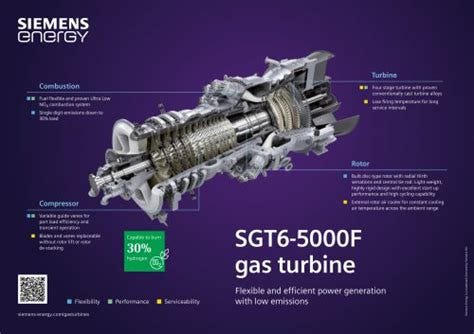
Miller’s numbers are not the stuff of panic; they are worse, because they are boring and contractual. GE Vernova is carrying 122 gigawatts of equipment backlog plus slot reservations. Siemens Energy has 104 GW of commitments. Mitsubishi Heavy Industries has 37 GW of large-frame contract backlog. Those three companies control roughly two-thirds of the world’s turbine manufacturing capacity, a share Miller expects to rise toward 70 percent by 2030. Meanwhile GE shipped 5 GW in the third quarter.
And here is the line I would frame and hang in every energy ministry on the planet: during the third quarter of 2026, GE sold multiple production slots for delivery in 2032. Not 2027. Not “as soon as possible.” 2032. If you order a large gas turbine today, there is a decent chance your grandchild will be in middle school when it starts producing electricity.
GE itself put gas-equipment lead times at about three years last April and advises operators to plan rotor needs three to five years before an outage. Large power transformers take two and a half to three years; the extra-high-voltage kind can take five. These are not wartime emergency numbers. These are the numbers for customers who are being polite and patient.....
The bottom line
Miller’s central planning case holds that procurement and restoration risk stays material through 2031, with “conditional normalization” possible somewhere between 2032 and 2035. Translated from consultant into English: things might get better in about a decade, if the factories deliver, the spares get rebuilt, the fuel and grids are repaired, and nobody blows up anything else in the meantime.
That last condition is the one I would not bet on. We are living through a war that destroys power infrastructure in minutes and an AI boom that consumes power equipment by the gigawatt, both of them drawing on three manufacturers and a handful of transformer factories. Every leader who promises a swift reconstruction, or a data center online by next summer, should be handed Miller’s report and a calendar. Then asked to circle 2032.
