Labels

Saturday, January 6, 2018

Climate Change – Is this an OMG Event? | Armstrong Economics

QUESTION: Is it in your view a minor cold blip or “OMG we’re all going to freeze to death and run out of food ?”
BR
ANSWER: We are looking at an unbelievable decline in the energy output of the sun which appears to be the most rapid decline in nearly 10,000 years. The Global Warming crowd may be setting society up for mass famine and death because they are deliberately pointing everyone in the opposite direction to get their portion of the $1 billion grants. Natural disasters are the most disastrous when the energy output of the sun declines. There has been a fatal interaction of ecological, agricultural, economic, and political factors that seem to be setting the stage for at least a repeat of what is known as the Great Famine of 1315-1317. The Great Famine started with bad weather in spring 1315. Crop failures lasted through 1316 until the summer harvest in 1317, and Europe did not fully recover until 1322. The period was marked by extreme levels of crime, disease, mass death and even cannibalism and infanticide. The crisis set in motion the great economic collapse that began during the fourteenth century. In our arrogance, we seem to believe we have conquered every aspect of the planet and many argue we can even alter the climate of the planet.
The collapse from the Medieval Warm period was rapid, but also deadly. When the climate turned down, what followed was suddenly bitter cold winters and drenching rains which then froze. Europe had expanded as the society always does in warm periods. A study has shown that desert rodent populations of many species tend to “fluctuate synchronously owing to pulses of primary production and seed availability during rainy years, and reduced seed production during droughts” (PLOS 2013).

I have reported that plagues correlate to the decline in temperature. During the 14th century, there were warnings in the form of rumors that told of a great plague in China and India that killed most of the populations there. The plague made its way to Europe when the Kipchak forces were besieging the Genoese trading post in the Crimea (Ukraine). The Kipchaks began to catapult plague-infested corpses over the walls and into the trading post. The disease spread quickly and the Genoese abandoned the outpost. They sailed back to Europe stopping in Sicily in 1347 taking the Black Death with them.
Four centuries of global warming left Europe with mild temperatures, which were the highest in 8,000 years. This led to the great economic expansion and the rebirth of trade and the economy. In fact, gold began to reappear in the coinage after about 600 years. This was the Great Medieval Warming period that marked the rebirth of civilization following the fall of the Roman Empire. The European continent’s farmers expanded agriculture and planted crops on vast quantities of land previously unsuitable for agriculture. This led to the increased food supply which, like desert rodents, fueled a population explosion that tripled the number of people in medieval Europe.
First, we have the sharp decline in weather. This resulted in those marginal lands that had been cultivated ceasing to produce crops as frosts and floods dominated the climate. Millions of extra mouths had to be fed and many died from the famine. Rebellions and civil wars emerged and this, in turn, exacerbated the crisis. Then the terrible weather turned deadly and the first disease began to appear in the livestock. Two consecutive harvest failures in 1314 and 1315 launched seven years of famine, resulting in the deaths of between 5% and 12% of the population of northern Europe.
Yes, there have been famines caused by mankind. The worst in history remains that which occurred during the 20th century. This was the Russian famine created by Communism. Stalin’s forced collectivization program starved to death some 5 million Russians. Stalin took the food from Ukraine for Russia resulting in another 8 million Ukrainian deaths. Some 25 million Chinese died of hunger as a consequence of Mao’s Great Leap Forward, which also completely failed when bureaucrats try to run things from a central government perspective. Both of these modern famines were the result of Socialism/Communism taking the control away from the individual and handing it to bureaucrats in the central office.
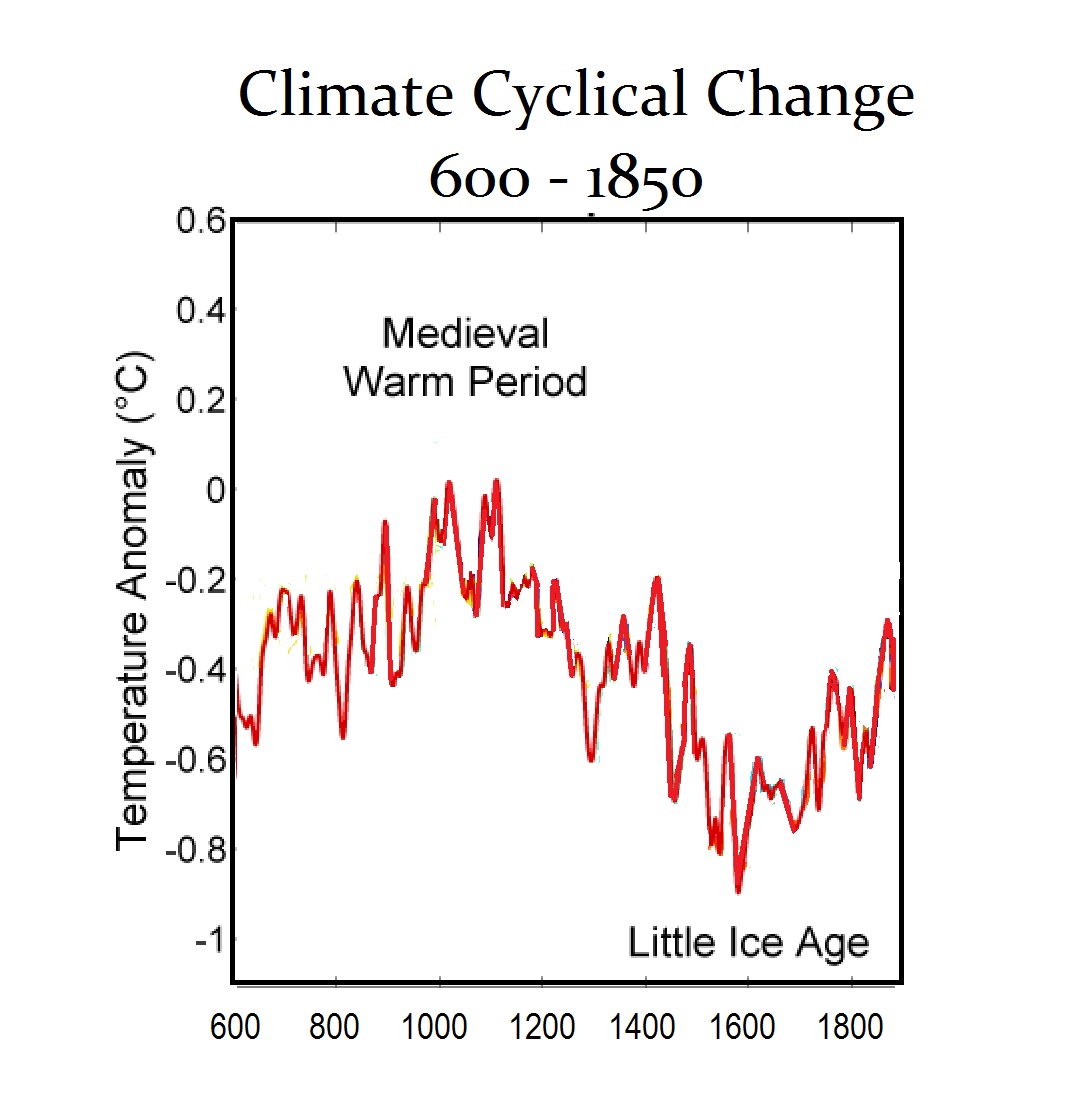

My concern here is the correlations of pandemics to the decline in the energy output of the sun. That decline from the Medieval Warming Period set in motion what many call the Little Ice Age. Even after the extreme low, Europe is rapidly turning colder much faster than expected in what we would call technically a retest of the lows. That sharp decline was a real global cooling period for Europe known as the Deep Freeze of 1709. In the first few months of 1709 remained in a deep freeze that again wiped out food supplies. People were ice-skating on the canals of Venice, which against was highly unusual to see such cold that far south on the water. People could cross the Baltic Sea on horseback because it was completely frozen! You could not ring a church bell because it would shatter it was that cold.
Therefore, to answer the question do we face an OMG event with famine? The answer is yes! The worst of this may come during the 2020-2024 period. I have reported that it appears the next 8.6-year wave on the ECM maybe setting up for a rally in commodities. That will include food.

https://www.armstrongeconomics.com/world-news/climate/climate-change-is-the-an-omg-event/

Start a Blog - By Tom Woods

If you’re reading this, chances are you’ve considered starting a blog.
Lots of people consider it, but few of them do it. They don’t know what step one is, and they probably assume the process is complicated, even insurmountable.
Nope.
It’s easy. I can have you up and running in five minutes.
A blog can improve your writing, position you as an authority, help you let off steam, build an audience, earn affiliate commissions — you name it.
Where Do You Start?
The first thing you need is a name for your site – a domain name. Without a domain name, you’d have to tell people to visit you at something hideous like 123.456.789.123/happyearner. A domain name, on the other hand, can be recalled easily.
This can be tricky, since most of the names you might want, at least with a .com suffix, are likely to be taken already. You can certainly go the .net route, or adopt still other, less common suffixes, but don’t rule out .com too hastily. It’s possible to be creative with your site name and come up with a .com domain that hasn’t yet been taken.
In fact, a number of sites can help you brainstorm for an available .com domain that works for you. Free services like BustAName.com, LeanDomainSearch.com, and NameBoy.com, to mention just a few, will take one or more keywords you’d like in your domain name and will give you a lengthy list of available domain names, which you would probably not have thought of on your own, that incorporate the keyword(s) you specified.
You can buy your domain name through a company like GoDaddy, and in many cases you can get a domain name as a bonus when you sign up with your hosting company (see below).
Your Next Step: Choosing a Hosting Company
Once you’ve decided on a domain name, you’ll need a hosting company. We might compare your domain name to your physical address – it’s where people can find you. And like your physical address in the real world, you can’t just occupy a location without paying. Your Internet address needs to be leased.
Your website is composed of a number of files. They need to reside on a computer somewhere so that other people – your site visitors – can see them. These computers are known as servers, and your hosting company owns them.
If you’re just getting started, you can get by just fine with companies like Bluehost. They have an excellent reputation, and my followers have had very good experiences with them.
Eventually, as your traffic figures grow larger, you may want to switch to the company we at HappyEarner.com use, which is WP Engine. They’re pricier than these other companies, but you get what you pay for, and as your visitor numbers climb, you’ll want the benefits of top-notch support, lightning-fast loading speeds – believe it or not, studies show that a difference of just seconds in loading time can mean huge visitor losses for you – and overall reliability. That’s why we use it here.
Either way, drop us a line at bonuses@tomwoods.com after you sign up either through our Bluehost link or our WP Engine link and we’ll send you 24 free video tutorials to get you from beginner to expert blogger!
From No Blog to Blog in Five Minutes
If I were to describe every little step involved in setting up your blog, I’d drive you crazy. It’s like tying your shoes: if I just show you how to do it, it’s much easier than if I try to describe it.
That’s why I made a special, step-by-step video walking you through how to go from having no blog to having a blog. You can have your blog and be posting your first post within – no joke – five minutes!
You’ll be using WordPress for your blog. It’s easy to use. In the video above, I show you how to write a post and publish it on your blog using WordPress. If you’re familiar with standard word processing software like Microsoft Word, you’ll find WordPress a breeze.
Tom Woods [send him mail; visit his website], holds a Ph.D. in history from Columbia University and is the New York Times bestselling author of 12 books, as well as the host of The Tom Woods Show, a libertarian podcast with over one thousand episodes. Grab his free eBook Sane Space: Libertarian Dispatches from Bizarro America.
Copyright © 2018 The Happy Earner
Previous article by Tom Woods: The Left-Wing Pulpit


On the Failure of the Communist Coup in the USSR in Mid-August 1991-Anthony Easton

Anthony Easton offered insights on the coup here: https://www.garynorth.com/public/17558.cfm
There was a follow-up by a site member on a forum.
August 1991 Coup attempt "The failed coup against Gorbachev occurred on August 18, 1991" My wife and I were returning from a couple of months in Eastern Europe, mostly in Russia. Our hosts were Ham Radio operators that had invited me to tour Russia. My call sign was well-known worldwide and that is why it happened.
We later learned how the Coup was stopped. Our Russian Ham Radio friends just happened to have a Ham Radio station in the building where Gorbachev was located. The telephone and power lines had been cut to stop the military from learning of the Coup. One of our Ham friends was able to get a message out that quickly got to the military. They showed up and stopped the Coup.
A few months later one of those Russian Hams was visiting the USA and came to California. We hosted him and he explained how it all happened.
This will be very hard to believe, but the only reliable communication in Russia was Ham Radio. Private people had an underground system that actually worked. They also knew that the propaganda was crap because they could talk with us anytime that they wanted. However, we learned that it was mostly them listening to us talk on Ham Radio amongst ourselves that they learned about our lifestyle.
Nothing there worked. If it weren't for the "black market" there would have been nothing to eat. I could tell stories for days about life in Russia. We stayed in private homes for most of our time.

Easton responded in an email to me.

This is correct. Ham radio was critical to provide the general population with the truth to counter the continuous lies of the Soviet State. As an Amateur Extra Class "ticket holder" myself, I too know the power of Ham Radio operators in keeping freedom alive worldwide. Amateur Radio is a vital force in the world today, and with the ability to bounce signals off the moon and Ham Radio satellites, individual transmissions are difficult to monitor and control in all but the most totalitarian state (like North Korea today).
In the Soviet state dacha in the Crimea where Gorbachev was vacationing when the coup was attempted, the LOCAL telephone service and power were indeed cut. This was easily done by a couple of dozen renegade security forces reporting to one of the Coup Plotters sent from Moscow.
However, neither domestic nor international telephone circuits in and out of Moscow were cut or affected in any way. All ordinary rotary-dial "black telephone" proletariat traffic was maintained as normal. Nor was the Communist Party's secure touch-tone "Red Phone Network" affected in any way. This was a separate modern national network of 50,000 telephones -- similar to the American military's Autovon Network (see:https://en.wikipedia.org/wiki/Autovon). I have direct knowledge of this.
Information on the Gorbachev "house arrest" was, in fact, known instantly by multiple civilian and military Party authorities in Moscow as well as at the regional command centers of both Internal Security and Military Defense in Ukraine. This happened within minutes of the incident occurring. Gorbachev's sudden and unauthorized detention was not a surprise to the Party. It was only a surprise to the 97% of the proletariat who were not members of the Communist Party. For the 97%, however, Ham Radio was truly the people's information and communications pipeline.
The Coup Plotters did NOT, for example, have my powerful friend, the head of the Moscow Telephone Company, on their side. Nor many other key players who needed to agree to make the coup a success. The coup was an ill-thought-out project by a group of renegades. It was NOT in any official way supported by either the Alpha Forces Commandant, the Atomic Forces General, or the KGB Directorates.
The half-dozen Coup Plotters were on the periphery of real power, although some were closer than others to the KGB para-military enforcement units. They had blindly hoped that their actions would quickly win acceptance by their Central Committee comrades.
But they forgot to take into account the real-world mechanisms of asserting power -- especially in an uber-bureaucratic state, the USSR.
So, this is what happened "on the ground" in Moscow: Orders were given to a number of key people personally by the Coup Plotters,-verbally, to do certain things. This included shutting down our Moscow cable TV system - while it was being watched real-time by the Central Committee members in their apartments adjacent to our Central Committee hotel "headend".
Some forces loyal to the Coup Plotters did follow their verbal orders, violating protocol. These orders were issued beyond the powers of the Coup Plotters' official authority as listed in the Chart of Command of the USSR. The Coup Plotters did have armed guards with them who were loyal to them, but of course in those days, every member of the Central Committee with any power had similar armed personal protection forces.
Hmmm... So what can a good Comrade do faced with such a dilemma...?
The solution I personally know of was that the Russian "Director General" in charge of our J/V CATV system replied, loosely: "But of course, Comrade, we will follow your orders. But, as you understand, this is the Soviet Union, and we operate along well-established lines of Protocol. We need to have these orders in writing, signed and with the appropriate seals of authority included. Upon receiving these documents, we will, of course comply immediately".
The Coup Plotter returned to his office and ordered the documents to be prepared for delivery with due haste. By the time that this was expected to happen (24 hours later), the coup had collapsed, the plotters arrested, with one having committed suicide before capture.
Under Yeltsin's command in the Moscow "White House," as the head of the Russian Federation unit of the USSR, and with his own armed 'National Guard,' Yeltsin was able to personally stop the coup process by using his own chain-of-command authority -- with the necessary written documentation and orders being provided -- to ignore the verbal orders of the Coup Plotters.
The result?
Once again, the old Soviet truism: "Paper trumps People" was proved true. Standing on an Alpha Group tank in front of the White House provided a popular image broadcast by the International News networks with their cameras stationed on the roof of the International Media Center just across the river. Everyone saw what was happening around the world, and in the living rooms of our Central Committee apartments. Yeltsin was a brilliant politician! But he also was a smart bureaucrat who knew how to work the System (i.e., the Party which was, of course, above the State). The Comrades saw the world's condemnation. They blinked. The news embargo never happened for those who mattered.
One could argue that the real reason the Coup failed was that the specific ego's involved ultimately didn't understand how the system really worked. As the soldier in charge of a crack troop of Alpha Guards, whose orders would you obey? The written (and documented) orders of Yeltsin, or the verbal command issued by the Minister of Agriculture and his buddies? In the end, it is the paperwork that survives which gives justification to the bureaucratic phrase: "But I was only following Orders -and they were Written and had the appropriate Seals!"
And that night we dialed up and logged into our Moscow-based billing server from California and collected Visa/MC/Amex payments with no interruption of service at 9,600 bits-per-second. Our fax lines worked fine, too. Our Moscow regional Cable TV System never went off the air.
If there is a "Moral" to the story, it's this: If you REALLY want to do a successful coup, you MUST absolutely, positively, and ruthlessly kill all communications channels among the people who hold real power.
And that doesn't mean the non-Party member "ordinary citizen" in the USSR. It means your fellow Comrades in power at the top of the Party.
Since Coup Plotters weren't, in their heart of hearts, really serious or bloodthirsty enough, the Coup was doomed to fail. That's what I told the CNN interviewers while the Coup was still unfolding.
Business continued unaffected as usual, and in a few months, many (most?) clever members of the Central Committee became rich "privatizing" the USSR carcass by transferring the State ownership of the means of production to their own private pockets. Under Yeltsin, billionaires were created overnight. A society of slaves was converted into a society of consumers who were free to leave the country with newly minted international passports. Trickle-down economics worked to do its thing to eventually help the proletariat in the hinterland.
Now there are hundreds of local and international TV channels carried on dozens of national Cable TV Systems, and RT (the Kremlin-owned international version of "CNN") is carried on Cable TV Networks in 100 countries. Private cellular telephone systems and high-speed Internet connections operate nationwide. The 4 tallest skyscrapers in Europe are in Russia, and inter-region high-speed trains zip along at twice the Amtrak speeds.
But is Russian life any better?
The average Russian "voter" likes Putin because the citizen is wealthier, lives longer, can travel abroad, and is free to raise his family without constantly repeating the great lie of the failed Soviet "people's paradise". Russian birthrate is beginning to rise again. The old USSR is once and truly dead and buried.
I used to say that Russian "Democracy" would evolve into an Italian-like system, with 100 families in charge instead of 10. But I was wrong. Today, the "Chairman of the Board," the world's richest man, controls the company business through his gaggle of Vice Presidents and "friends of the family."
And what happened to the good old Communists? The lower-level Party members made do. Some not so well. The Party's bank accounts had long been transferred overseas and looted by the top comrades. The Party money was never recovered by the Russian State. The smart ones at the top became the new "Biznessmen". Many moved to the Riviera with riches beyond imagination The game continues.
In the end, a "chicken in every pot" trumps the dead, cold hand of state "socialism" every time. Sometimes it just takes a little time -- in the case of the Soviet Union roughly 70 years. I like to think that the miracle of modern global telecommunications - especially the visual power of real-time television -- helped the Genie to escape the bottle in the USSR, and in the process broke the bottle itself. Without firing a shot.


Vox Popoli: Make California Mexico Again

Michael Walsh asserts that California lawmakers are moving towards seceding from the Union:

California Democrats—as radical a group of anti-Americans as you will find in this country, whether legal or “undocumented”—have again fired on Fort Sumter. And once again (don’t kid yourselves), the goal is de facto and, later, de jure, secession from the United States of America, as part of the Aztlan-inspired Reconquista of what Hispanic radicals consider lost territory.

Never mind that California has been a state since 1850, and fought on the Union side in the Civil War. Never mind that California was settled by hard-working New Englanders and Midwesterners, who transformed it from a wilderness into the most prosperous and, later, largest, state in the Union. Never mind that, since the early 20th century, California has been the pot of gold at the end of the American rainbow, where both winners and losers went to seek their fortunes. The Mexicans, who failed to settle the territory properly in the first place, now want it back.

California should be encouraged to secede, and the rest of the USA should deport all of those who sympathize with the California Democrats to live under a regime more to their ideological liking. The irony of Walsh's remind that California "was settled by hard-working New Englanders and Midwesterners" is his refusal to acknowledge that it has been subsequently settled by Mexicans and dreamchasers seeking Silicon Valley fortune and Hollywood fame from around the USA.

Walsh also ignores that the territory was settled long before those "hard-working New Englanders and Midwesterners" arrived and ruined the place. The fact that he doesn't regard those Indian and Mexican settlements as "proper" is irrelevant; if you're going to assert the right of conquest to a territory, then you have to surrender that territory when it is subsequently invaded and conquered.

Immigration is invasion. It always has been. And if you're dumb enough to believe otherwise, well, don't cry when you lose your territory and your ability to rule yourself, because it is absolutely and inevitably going to happen. And, to be blunt, you deserve to lose it, because you refused to defend it. America is endangered and the USA is in its death throes because Americans were stupid enough to swallow their own bullshit when it was fed to them in a poisoned variant. The astonishing idiocy of Americans, who believed that invading foreigners would genuinely sacrifice the interests of themselves, their families, and their peoples in order to become imitation Americans will be marveled at by future historians. It may well prove to be the single stupidest, most self-destructive act by a powerful nation since Moctezuma allowed himself to be captured by Cortes as "a diplomatic gesture".

Meanwhile, both Israel and Pakistan are proving their ability to do what is supposedly impossible for the Greatest Nation on Earth.

On Wednesday, the Pakistani government ordered 1.4 million Afghan refugees to leave the country in 30 days.

If the God-Emperor is going to save the Union and Make America Great Again, he is going to have to order the same for all post-1965 immigrants and their posterity. Anything short of that will prove insufficient and will most likely lead to war and the breakup of the USA within 15 years.

https://voxday.blogspot.com/2018/01/make-california-mexico-again.html?m=1

Friday, January 5, 2018

Deconstructing Marxist Critical Theory - By E.M. Cadwaladr

For those of you who haven't been formally introduced to the sociological doomsday weapon of the 20th century, critical theory is an approach to analyzing society not for the purpose of understanding it, but for the purpose of transforming it by undermining its existing institutions.  The hard work of understanding how and why people do things is unnecessary if your goal is merely to take a sledgehammer to the machinery.  Critical theory is the invention of the Marxist Frankfort School of the 1930s, so, as one might expect, it reinterprets everything it looks at through a Marxist (or neo-Marxist) lens.  The women's studies, racial studies, and gender studies curricula found in almost every university in the West are the direct products of the more general critical theory program.  Many things that end in "theory" (e.g., deconstruction theory, queer theory) are also critical theory's progeny.
The connection between critical theory and Marxism is neither disputable nor often denied.  The discipline's formulators (Max Horkheimer, Herbert Marcuse, Walter Benjamin, et al.) were all self-identified Marxists teaching in an avowedly Marxist school.  Modern academic proponents of critical theory and its descendants do not go to any great lengths to deny either the discipline's origins or their own fundamentally Marxist intentions.  Only the mainstream media, renowned for denying the existence of gorillas discovered in plain sight, deny that the echoes they make in their echo chambers have a distinctly German socialist accent.
In our deconstruction of this leftist tool, let's begin with an examination of the promise Marxism has always made though never achieved.  While the language of the promise has changed from "emancipation" and "liberation" to "social justice" over the years, the basic sales pitch behind all leftist proselytism has remained consistent – the promotion of a better and fairer society.  Well, who wouldn't want that?  Any decent person, given a choice between a fair society and an unfair one, all else being equal, prefers a fair one.  For many reasons, I believe that the Marxist formulation is naïve and problematic, but for the sake of argument, let's just accept the leftist claim as it stands: their goal is to build a better and fairer society.
In the pursuit of a better and fairer society, critical theory comes with one colossal rub.  If we accept that such a society can exist, one of the characteristics it has to possess is at least some degree of stability.  Implicit in "better and fairer" must be the notion that most improvements made become permanent.  A utopia poised to blow itself apart at the end of one perfectly blissful generation certainly clashes with the left's new buzzword: "sustainability."  Moreover, even the most rabid leftists will admit, if pressed, that change is not always good.  For them to believe that white colonizers wickedly oppressed the non-whites of the world, leftists have to imagine some better condition non-whites were living in prior to the colonization.  In other words, they have to admit that conditions can get worse in history – that history isn't rigged by nature to automatically make things better.  Their argument against conservatism, if they have one, has to be that things can be deliberately improved – not simply that blowing up the status quo inevitably leads to an improvement.  The indiscriminate destruction of the status quo, however, is precisely what critical theory was designed to accomplish.
An all too familiar scenario plays itself out daily on modern college campuses.  The old guard of liberal professors, who see themselves as the lineal descendants of Herbert Marcuse and Gloria Steinem (if not quite Leon Trotsky and Rosa Luxembourg), are more and more seen by their politically indoctrinated students as the closest available examples of white privilege, entrenched authority, and (if they happen to be male) the dreaded patriarchy.  Genuinely conservative professors have been hunted to near extinction, so liberal white or older profs must now genuflect embarrassingly to avoid the role of hated oppressors.  They're the authorities who come most easily to hand and are much more fragile targets than conservatives ever were.  They have few ideological places to run.  Even declaring sexual attraction to members of the same sex no longer offers victim status to the radical of yesteryear.  For today's more dedicated social justice warriors, full trans-sexuality is about the only refuge for the terminally Caucasian.  The speech codes and trigger warnings that have proliferated in today's classrooms are not the direct invention of left's old guard, but are instead demanded by the students.  They are a grotesque byproduct of critical theory itself.  The monsters, it seems, grant no special deference to their ultimate creators.  The indoctrinated are not the minions of their forbears, but are instead the ungovernable creation of a plan gone out of control.
It is likely that the current intellectual poverty of the left is also a byproduct of critical theory's basic tenets.  When racial studies programs were originally formed, it was taken as a given that the goal was not honest research, but rather the production of a continuous moaning and howling over grievances.  That is precisely what critical theory was meant to produce.  Papers written by black students asserting that whites (or cops) acted as a single, corporate, nefarious body could never have passed muster if viewed critically.  Neither could the feminist re-invention of the Western world as a "rape culture."  However, since the goal of racial and gender studies programs never was truth, but merely the raw articulation of a certain kind of outrage, normal academic standards never applied.  Reason was not the goal, but an impediment to the goal.
Measure people not by the quality of their arguments, but by the pungency of their hatred, and you will get exactly what we have gotten: generations of narcissistic nihilists who see themselves as right by virtue of the intensity of their feelings.  For decades now, valid-looking academic credentials have been awarded for little more than unsupported posturing.  Many of these ideological monsters are now "educators" themselves.  Many others swell the bureaucracies of government.
If we are to overcome these people, we cannot lose sight of the methodology that created them.  Attempting to argue with anyone who helps himself to the idea that anyone who disagrees with him is wrong a priori is obviously futile.  Nevertheless, one sees innumerable instances in print, on television, and in social media of some frustrated conservative attempting to do just that.  We must stop wasting our time!  If progressives were amenable to reason, they would not be progressives.
The rational response to a madman is not to argue with the progressive, but to firmly separate him from any means of doing harm.  Progressives must be removed from power, including, at a low level, taking away the public funding that allows them to make careers as full-time street agitators.  While it may make us uncomfortable to deprive people of the freedoms to which Americans ought to be entitled, we must face certain facts.  When someone explicitly makes war on any and all of our existing institutions, it is foolish to imagine that he is, somehow, just our fellow countryman with different opinions.  Such people are as much our enemies as any foreign invader.
When Muslims say they would like our Western laws and traditions replaced with sharia, I see no reason not to take them at their word.  When a Marxist says something similar, we should take him at face value, too.
http://www.americanthinker.com/articles/2018/01/deconstructing_marxist_critical_theory.html

Whose Ideas? - EPautos - Libertarian Car Talk

It’s been said that good ideas don’t require force – while bad ones rarely get traction without it. True enough. But how about a qualifier?
Whose ideas?
Yours? Mine?
There is a kind of tacitly agreed upon – or at least, rarely questioned – notion that we all agree on what constitutes a “good” idea. It’s the keystone of coercive collectivism, without which that ideology loses moral legitimacy.
But in fact, we don’t agree about what a “good” idea is. Millions of individuals tend to have millions of individually variable ideas about that.
So the question becomes: Whose ideas will prevail?
If there is a free market – in ideas as well as economics – this will sort itself out naturally and non-violently, via the signals of supply and demand. Actually, those two should be reversed. It is demand which determines supply (as well as price).
A question:
Is there market demand for six air bags (and back-up cameras and tire pressure inflation sensors and anti-whiplash head restraints, etc.) in every new car?
Wouldn’t it be nice to find out?
Unfortunately  there’s no way to know, because the market – millions of individual people’s freely expressed determinations about what’s “good” – hasn’t been allowed to operate. Instead, a handful of people’s idea that air bags (and the rest of it) are “good” has been imposed on everyone else, on the false presumption that everyone agrees it is good to have six air bags – and many other such things – installed in every new car. This is taken as a kind of collectively agreed upon noggin nodding. That illusion must be maintained, in order for the coercion and collectivism behind it to have any semblance of moral legitimacy.
And yet, it is obviously not legitimate because some noggins aren’t nodding – including mine.
Because more air bags is never enough air bags…
And even if it is just mine.
Morality isn’t democratically determined.
Why should my ideas – or yours – about the “good” of air bags or any other such thing be forced to take a back seat to anyone else’s opposite idea?
That is the moral question at issue. And it goes much deeper than air bags.     
It’s interesting to speculate what might be available, car-wise, if individual demand – as opposed to coercive collectivized mandate – were allowed to determine supply.
Actually, we can get a pretty good idea about what would be available, car-wise, if we were free to choose – and if the car industry were free to meet that demand – by looking at other goods which are built to suit individual demand as opposed to coercive collective mandate.
Personal computers, for example.   
You can buy a high-end Macbook, if that is your preference. It will be feather light, have amazing features, a high-resolution Retina display and a handsome aluminum case. It will also cost you $1,200 to start.
Or, you could buy a $300 no-name PC.
It won’t have all the features of the Macbook. But it may be sufficient for your needs. Cool – right? The government – i.e., a handful of people who’ve somehow acquired the power to make and enforce such decisions – doesn’t (yet) mandate that you buy a high-resolution Retina display and so on. You are free – for now – to buy the computer which meets your ideas about “good”  . . . and “good enough.”   
…it gets the job done.
Imagine that same dynamic allowed to play out with regard to cars. It’s not even necessary to imagine.
We can know.   
The government only got into the car design business in a serious way in the mid-‘70s. Before then, we we were largely free to buy what we wanted – not what coercive collectivism imposed on us. There was a market for bare-bones simplicity, high-end luxury and almost every conceivable thing in between. Not coincidentally, the golden age of car design is generally considered to be the pre-government design era. Batfinned Cadillacs – and air-cooled Corvairs.
Sometimes, mistakes were made – the Edsel, famously – but nothing was forced on people. The Edsel sucked, but it wasn’t subsidized. Ford ate the loss – not the taxpayer. Ideas came – and stayed or went – on the merits. If people wanted it, they bought it. If not, they didn’t. In the case of the latter, the car industry stopped making it.Seems reasonable.
Then along came unreasonable. Or rather, immoral.
Some people – a gaggle of pushy know-it-alls – decided their notions of what is “good” must be applied generally – even if the market rampantly disagreed with their notion. Air bags are the best example of this cross-wiring of the natural order of things.
Or what ought to be the natural order of things.
They were invented – then offered. So far, so good. The market – the free choice of millions of individuals – said nyet. And that’s where it should have ended. The bags cost too much vs. the putative value. Mark that. Value – the “good” – is a subjective estimation calculated in the mind of every human individual. I can have the air bags – and maybe they’ll be nice to have if I crash into a tree. Or I could buy leather seats, which I’ll enjoy much more.
I’ll take the seats, please!
How is this meaningfully – and morally – different than a person electing to buy the $300 tablet instead of the $,1200 Mac? Why is it ok to force people to – in effect – buy the $1,200 Mac?
Because “safety” is a consideration? Only of degree, not kind. A high-end Retina display is without question easier on the eyes – and so, safer – than a basic display. Besides, why is this weighing of the pros and cons of your safety or your health the business – morally speaking – of anyone other than yourself?
How did it happen that other people’s ideas of what’s “good” are binding on us?    
It’s the craziest – and the most dangerous – thing imaginable.
Coercive collectivism – the ideology responsible for literally hundreds of millions of murdered victims – depends on maintaining the illusion that everyone is in agreement. That we are all one big “team.”
And of course, every team has leaders.
. . .
Got a question about cars – or anything else? Click on the “ask Eric” link and send ’em in!
If you like what you’ve found here, please consider supporting EPautos.
We depend on you to keep the wheels turning!
Our donate button is here.
 If you prefer not to use PayPal, our mailing address is:
EPautos
721 Hummingbird Lane SE
Copper Hill, VA 24079

Why there won’t be a revolution in Iran | Asia Times - By PEPE ESCOBAR

Iranian President Hassan Rouhani did the right thing going on television and at least acknowledging popular anger over hard economic times. Inflation is high at 12% but down from 40% at the start of Rouhani’s first term. And the recent increase in fuel and food prices by up to 40% has hardly helped.
That was part of Team Rouhani’s 2018 budget, which cuts subsidies for the poor – a key feature of the previous Ahmadinejad administration.
Then there is youth unemployment, which hovers around the 30% mark. Similar figures recently came out of Spain, a member of the European Union. Of course, that explains why the bulk of the protesters are under 25 from working class backgrounds.
What Rouhani should have explained to Iranians in detail is the direct consequences of hard economic times and United States sanctions, which are affecting the country.
These were coupled with financial threats against western firms now back in business, or at least contemplating opening up operations, in Iran.
Rouhani did promise after signing the Joint Comprehensive Plan of Action, also known as the Iran nuclear deal, in the Austrian capital of Vienna in 2015 that it would lead to more jobs and stimulate the economy.
While that has not been the case, legitimate protests singling out economic problems have never gone away. In fact, they have been part of the Iranian picture for decades.
If we consider the Islamic Republic experiment, a sort of “theocracy with democratic characteristics,” the most striking element is how deeply rooted it is in the country.
I learned this during my many trips to Iran and it has a great deal to do with the basij, or voluntary militias. They have permeated all aspects of social life from unions to student bodies and civil servant groups.
In this respect, there is a strong similarity to China, where the Communist Party is embedded in the very fabric of society.
Talking to young people in places such as Kashan or Mashhad showed me how solid the popular base was behind the Islamic Republic experiment. It was certainly more thought-provoking than listening to ayatollahs in Qom.
Still, what is happening now in Iran is that legitimate protests related to economic hardships have been hijacked by the usual suspects in a move to influence the minority. After all, Rouhani’s administration is comparatively liberal compared to the populist Ahmadinejad government.
So, what we have is a concerted attempt to turn legitimate protests into a “revolutionary” movement with the aim of bringing about a regime change. In all practical purposes, this would be civil war.
Well, it will simply not work. Anyone familiar with Iran knows the country’s civil society is far too sophisticated to fall into such a crude and obvious trap.
For a clear take on the foreign influence angle, you should watch Professor Mohammad Marandi, of the University of Tehran, an academic of absolute integrity, arguing with a former BBC employee on the Qatari-owned Al Jazeera television network.
Indeed, what is certain is that foreign elements are acting as provocateurs to influence the protests. This “whole world is watching” tone is meant to intimidate Tehran’s response.
Yet there has to be a crackdown against the violence as Rouhani strongly hinted. Imagine the police response if the level of violence seen on Iranian streets was happening in France or Germany?
Regime change is unlikely but what is in play is setting the scene for a further renewal of economic sanctions against Iran. Possibly, in this case by the EU. Hopefully, it will not fall into this trap.
Anyway, Tehran is already gearing up to increase business across Eurasia through China’s new Silk Roads, the Belt and Road Initiative, and the Eurasia Economic Union.
In the end, it is up to Team Rouhani to be creative in alleviating the burden on the economic front.
The change is unlikely but what is in play is setting the scene for a further renewal of economic sanctions