https://paulmarik.substack.com/p/cancers-with-strong-fatty-acid-oxidation
Cancers With Strong Fatty Acid Oxidation (FAO) and OXPHOS Dependence
Implications for the Multi-Axis Metabolic Trap
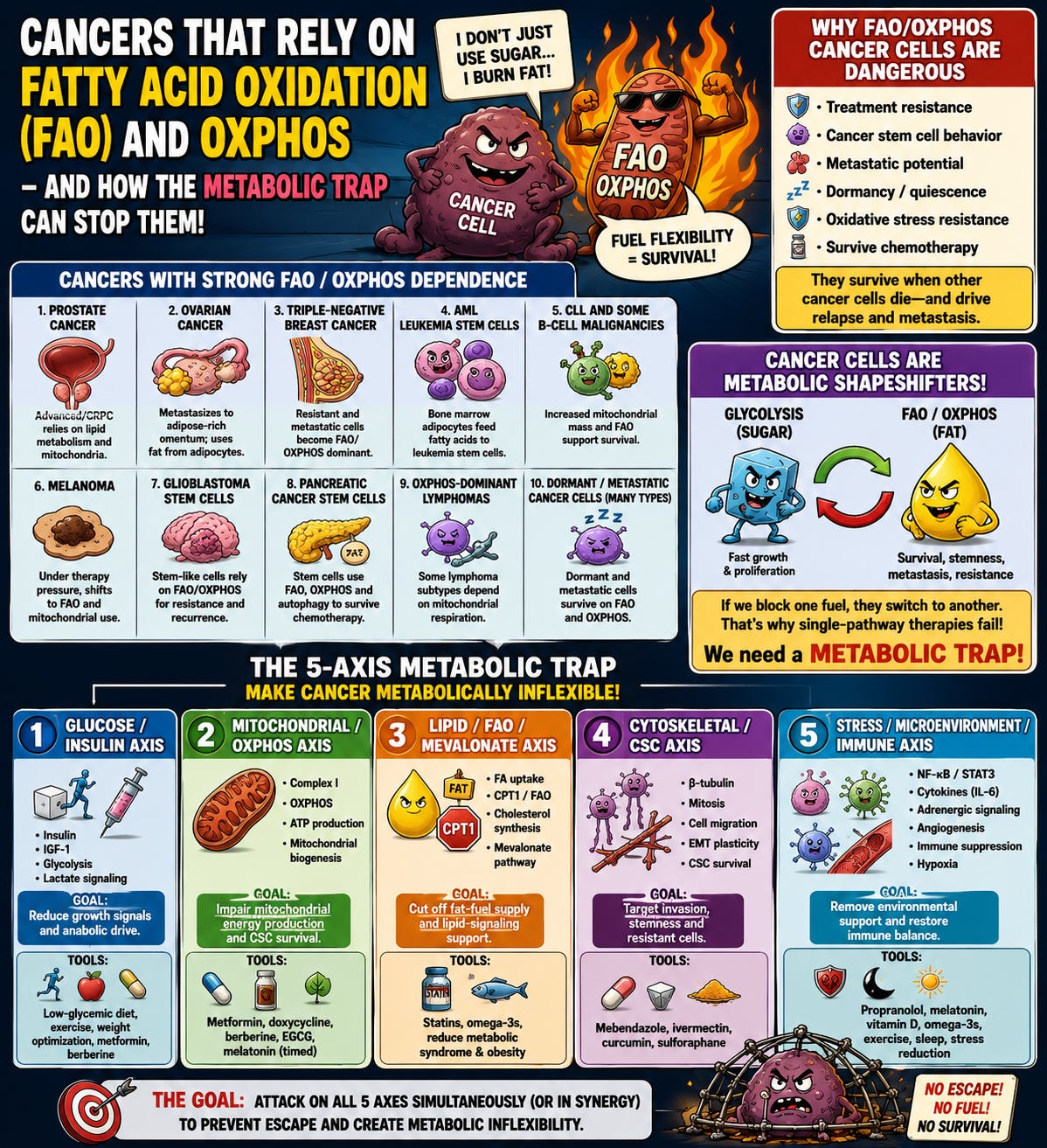
One of the most important developments in modern cancer metabolism is the realization that many aggressive cancers are not simply:
glucose-addicted glycolytic tumors.
Instead, many cancers—particularly:
metastatic cells,
dormant cells,
cancer stem cells (CSCs),
and therapy-resistant populations—
depend heavily on:
fatty acid oxidation (FAO) and mitochondrial oxidative phosphorylation (OXPHOS).
This represents a major shift away from simplistic interpretations of the:
Warburg effect.
Cancer cells are extraordinarily adaptive.
When glycolysis is inhibited, many tumors compensate by:
increasing mitochondrial respiration,
enhancing FAO,
utilizing glutamine,
activating autophagy,
or increasing metabolic flexibility.
This is why:
single-pathway metabolic therapies frequently fail.
