Epigallocatechin-3-gallate (EGCG), the main catechin in green tea, shows broad anticancer activity in preclinical models by affecting many cancer “hallmarks”. In addition, its anti-cancer activity is supported by clinical studies.
Figure 1. Epigallocatechin Gallate
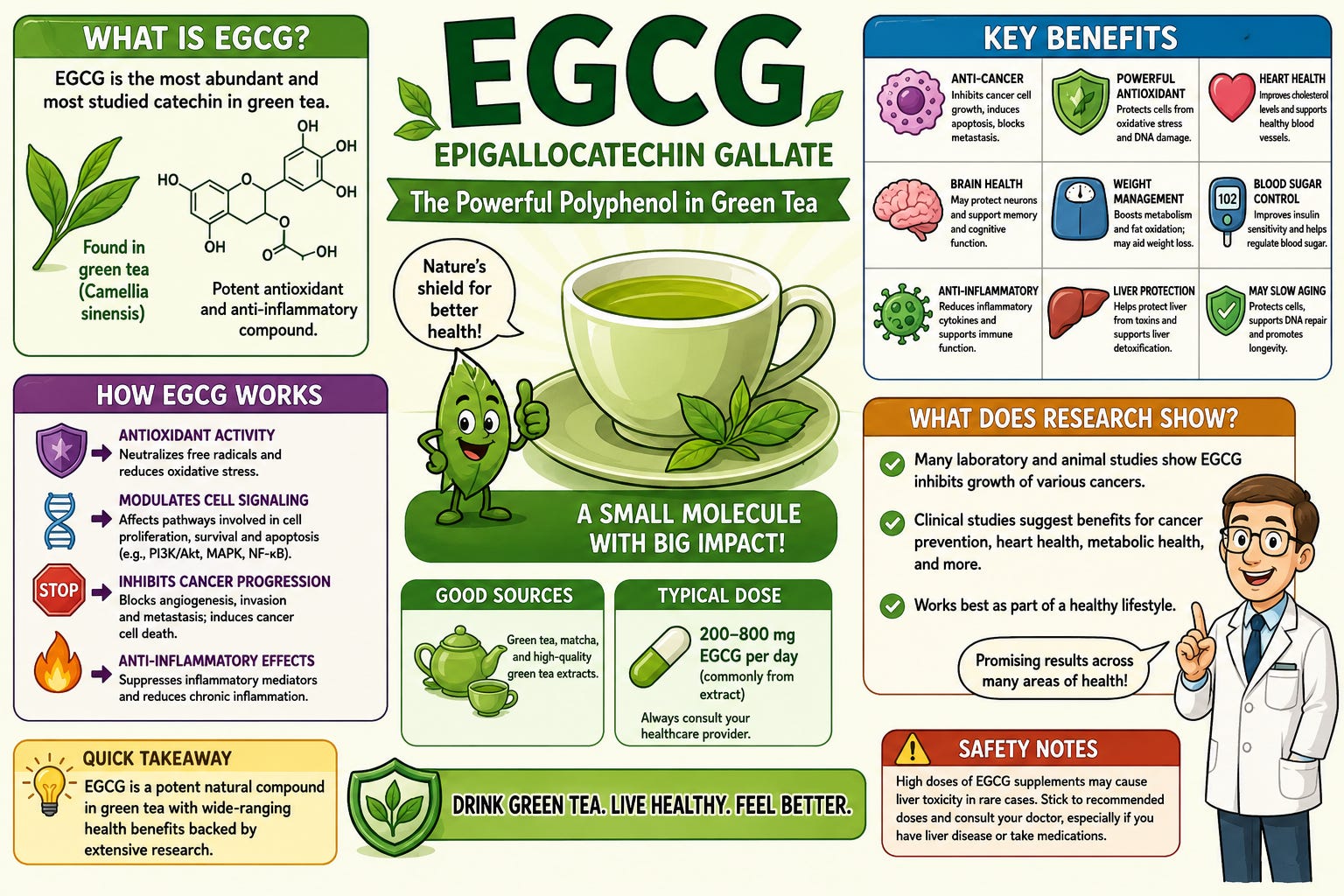
Key anticancer actions
Inhibits cancer cell growth by blocking proliferation and inducing cell cycle arrest, often at the G0/G1 or S phases in prostate, pancreatic, liver and other cancer cells.
Promotes apoptosis (programmed cell death) through mitochondrial pathways, including Bax activation, loss of mitochondrial membrane potential, cytochrome c release, caspase activation and downregulation of anti‑apoptotic proteins such as BCL‑2 and XIAP.
Suppresses angiogenesis, invasion and metastasis by inhibiting VEGF signaling, matrix metalloproteinases and cell adhesion/invasion in several tumor types, including hepatocellular carcinoma and lung cancer models.
